If you’ve been in business long enough, you’ve probably heard this before:
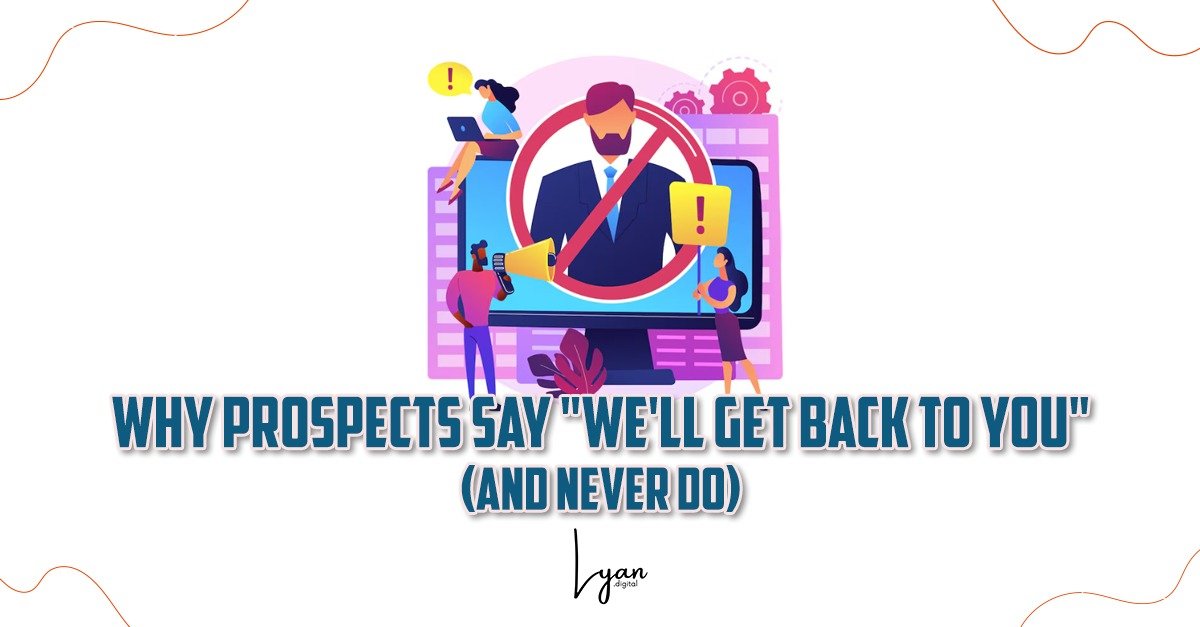
“Looks good. We’ll get back to you.”
At first, it sounds promising.
The meeting went well. The prospect seemed interested. There were no major objections. The conversation ended on a positive note.
Then nothing happens.
A week passes.
Then two.
Your follow-up email goes unanswered.
The proposal remains unopened.
And eventually, the opportunity disappears.
Most businesses assume the prospect wasn’t interested. But in many cases, that’s not what happened at all.
Over the years, I’ve noticed that “We’ll get back to you” is rarely a rejection. More often, it’s a sign that something is preventing the prospect from making a decision.
The challenge is understanding what that “something” is.
Let’s explore some of the most common reasons prospects disappear after what seemed like a positive conversation
-
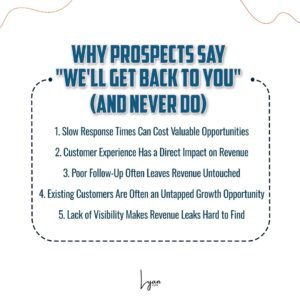
Slow response times can cost valuable opportunities
One of the biggest mistakes businesses make is assuming interest and commitment are the same thing.
They’re not.
A prospect can genuinely like your solution, appreciate your approach, and even agree with your pricing while still feeling uncertain about moving forward.
Most buying decisions involve risk.
The prospect is asking themselves questions like:
- Is this the right decision?
- What happens if this doesn’t work?
- Is there a better option available?
- Should we wait a little longer?
When those questions remain unresolved, people delay.
And delayed decisions often become forgotten decisions.
Key Insight
Interest starts the conversation. Confidence is what closes it
-
Customer experience has a impact on revenue
Many business owners assume they’re selling to one person.
In reality, they’re often selling to an entire organization.
The person you’re speaking to may love your proposal. They may want to move forward immediately.
But they still need approval from a manager, director, partner, or finance team.
What looks like inactivity from your side may actually be internal discussions happening behind the scenes.
The problem is that businesses often stop nurturing the opportunity during this period.
Instead of staying visible and helpful, they wait.
And waiting creates distance.
Key Insight
Sometimes the person you’re speaking to isn’t the person making the final decision.
-
Poor follow-up often leaves revenue untouched
This one surprises many people.
Your solution might solve a real problem.
Your pricing might be reasonable.
Your process might make complete sense.
But none of that matters if the prospect has bigger priorities demanding attention.
Businesses operate in constantly changing environments.
New projects emerge.
Budgets shift.
Urgent issues appear.
What felt important during your meeting can quickly move down the priority list.
That doesn’t mean the opportunity is gone forever.
It simply means your proposal isn’t at the top of their agenda right now.
Key Insight
Prospects don’t always say no. Sometimes they simply have more urgent problems to solve
-
Existing customers are often an untapped growth opportunity
We’ve all experienced this as buyers.
You start researching a solution and suddenly find yourself comparing endless options.
More websites.
More proposals.
More opinions.
More information.
Instead of creating clarity, it creates confusion.
I’ve seen businesses overwhelm prospects with lengthy proposals, technical documents, and detailed presentations when what the prospect really wanted was confidence in the outcome.
When decisions feel complicated, people often choose the safest option:
Doing nothing.
Key Insight
Confused prospects rarely make fast decisions.
-
Lack of visibility makes revenue leaks hard to find
Many opportunities aren’t lost during the sales conversation.
They’re lost afterwards.
A surprising number of businesses either follow up too aggressively or not at all.
Neither approach works particularly well.
Good follow-up isn’t about chasing people.
It’s about remaining useful.
It’s about staying visible without creating pressure.
It’s about helping prospects move forward when they’re ready.
The businesses that consistently win deals are often the ones that understand this balance.
Key Insight
Following up isn’t about reminding people you exist. It’s about helping them make a decision.
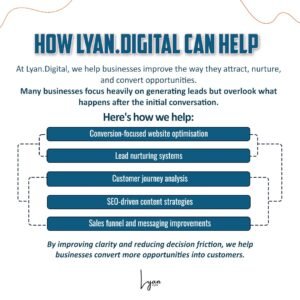
How Lyan.Digital Can Help
At Lyan.Digital, we help businesses improve the way they attract, nurture, and convert opportunities.
Many businesses focus heavily on generating leads but overlook what happens after the initial conversation.
Here’s how we help:
- Conversion-focused website optimisation
- Lead nurturing systems
- Customer journey analysis
- SEO-driven content strategies
- Sales funnel and messaging improvements
By improving clarity and reducing decision friction, we help businesses convert more opportunities into customers.
Frequently Asked Questions
Does “We’ll get back to you” always mean no? No. In many cases, it simply means the prospect isn’t ready to make a decision yet.
How long should I follow up with a prospect? There’s no universal rule, but consistent and value-driven follow-up often performs better than aggressive sales chasing.
Why do interested prospects disappear? Internal approvals, competing priorities, uncertainty, and decision fatigue are all common reasons.
Should I keep following up if I don’t get a response? Yes, but focus on providing value rather than repeatedly asking for updates.
Here’s how it helps
A Software Company Losing Demo Opportunities
The team assumed prospects who went silent weren’t interested. After improving follow-up sequences and providing educational content, demo-to-customer conversions improved significantly.
A Professional Services Firm Waiting for Responses
Rather than staying engaged after sending proposals, they waited for prospects to reply. A structured follow-up process helped revive several stalled opportunities.
A B2B Service Provider Facing Long Sales Cycles
By identifying decision-makers earlier and addressing internal approval challenges, they reduced delays and improved close rates.
One of the biggest misconceptions in sales is that silence equals rejection.
In reality, silence can mean many things.
It can mean uncertainty.
It can mean internal discussions.
It can mean shifting priorities.
It can even mean genuine interest that’s waiting for the right moment.
The businesses that consistently win opportunities understand this.
Instead of assuming a prospect has disappeared forever, they focus on reducing friction, building confidence, and staying relevant throughout the decision-making process.
Because more often than not, “We’ll get back to you” isn’t the end of the conversation.
It’s simply where the real decision-making begins.