A lot of businesses put enormous effort into getting the first meeting.
They run ads, build landing pages, send outreach messages, attend events, ask for referrals, and spend hours getting the right prospect onto a call.
Then the meeting happens.
The prospect seems interested.
They ask good questions.
They even say something like, “This looks promising. Send me the details.”
And then nothing happens.
This is where many businesses quietly lose revenue.
Not because the meeting went badly. Not because the prospect hated the offer. Not because the pricing was necessarily wrong.
The follow-up simply wasn’t strong enough.
I’ve seen good opportunities disappear because the next step was vague, delayed, or left entirely to the buyer.
The strange part is that businesses often keep chasing new leads while perfectly good opportunities are already sitting inside their pipeline.
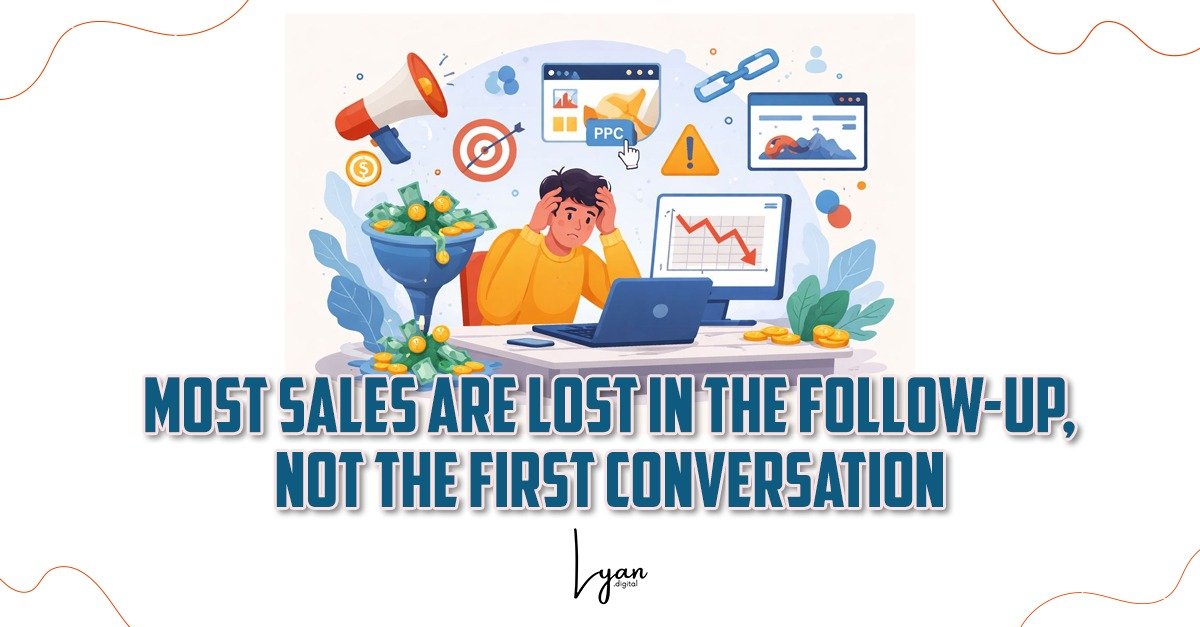
In many cases, the sale wasn’t lost at the top of the funnel.
It was lost somewhere between “sounds good” and “let’s move forward.
-
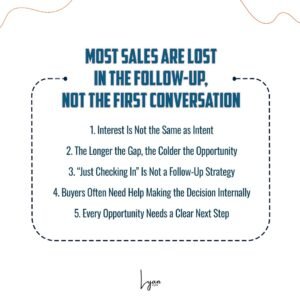
Interest Is Not the Same as Intent
One of the biggest mistakes in sales is assuming that an interested prospect is automatically a serious buyer.
They’re not the same thing.
Someone can like your idea, enjoy the meeting, appreciate your expertise, and still have no urgency to make a decision.
That’s why “they seemed interested” isn’t a strong indicator of whether a deal will close.
What matters more is whether there is a real problem, a reason to solve it now, and a clear decision process.
Without those things, the opportunity can remain warm for weeks without moving anywhere.
A good sales process separates genuine buying intent from polite interest.
Key Insight: A positive conversation is useful, but it isn’t the same as a buying decision
-
The Longer the Gap, the Colder the Opportunity
Momentum matters more than most businesses realize.
A prospect may leave a meeting feeling convinced.
But then they go back to emails, internal meetings, customer issues, deadlines, and ten other priorities.
Your proposal is no longer the center of their attention.
This is why delayed follow-ups are so expensive.
If you wait several days to send the next step, the buyer has already mentally moved on.
The best follow-ups usually happen while the conversation is still fresh.
That might mean sending a concise summary, confirming agreed next steps, or sharing exactly what was promised during the call.
You’re not trying to pressure the prospect.
You’re trying to preserve momentum.
Key Insight: Every unnecessary delay gives the buyer another opportunity to deprioritize the decision.
-
“Just Checking In” Is Not a Follow-Up Strategy
We’ve all received messages like this.
“Just checking in to see if you had a chance to review the proposal.”
There’s nothing technically wrong with it.
But it gives the buyer very little reason to respond.
Strong follow-ups add something to the conversation.
You might clarify a question raised during the meeting.
You might share a relevant example.
You might address a concern that came up.
You might make the decision easier by reducing the number of open questions.
The follow-up should move the conversation forward rather than simply ask whether the prospect has made a decision yet.
Key Insight: A useful follow-up creates progress. A weak follow-up simply asks for an update.
-
Buyers Often Need Help Making the Decision Internally
This is especially important in B2B sales.
The person you’re speaking to may not be the only person involved.
They may need approval from finance.
A founder may want to review the investment.
A technical team may have questions.
Another stakeholder may prefer a different provider.
This means your prospect may actually like your solution but still struggle to move the deal forward internally.
Good sales teams recognize this.
They make the buyer’s job easier.
That could mean providing a concise business case, clearly outlining expected outcomes, answering implementation questions, or creating a proposal that is easy to forward internally.
Sometimes the best follow-up isn’t about convincing your contact.
It’s about helping your contact convince everyone else.
Key Insight: In B2B sales, your prospect may need to sell your solution internally before they can buy it from you.
-
Every Opportunity Needs a Clear Next Step
One thing I’ve noticed in poorly managed pipelines is how many opportunities end with vague statements.
“We’ll discuss internally.”
“Send us the proposal.”
“Let’s reconnect soon.”
“We’ll get back to you.”
None of these are real next steps.
A strong sales conversation ends with clarity.
Who is doing what?
When will it happen?
When will both sides speak again?
If a proposal is being reviewed, when is the review expected to happen?
If another stakeholder needs to join, when will that conversation take place?
You won’t always get a firm commitment.
But the more specific the next step is, the less likely the opportunity is to disappear.
Key Insight: A sales opportunity without a defined next step is usually just a conversation sitting in a CRM.
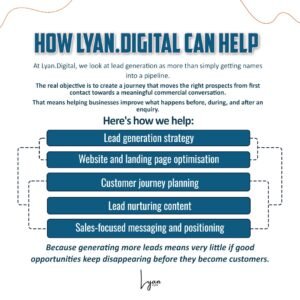
How Lyan.Digital Can Help
At Lyan.Digital, we look at lead generation as more than simply getting names into a pipeline.
The real objective is to create a journey that moves the right prospects from first contact towards a meaningful commercial conversation.
That means helping businesses improve what happens before, during, and after an enquiry.
Here’s how we help:
- Lead generation strategy
- Website and landing page optimisation
- Customer journey planning
- Lead nurturing content
- Sales-focused messaging and positioning
Because generating more leads means very little if good opportunities keep disappearing before they become customers.
Frequently Asked Questions
How often should I follow up with a prospect? There is no single perfect frequency. The timing should depend on what was discussed, the urgency of the opportunity, and the next step agreed during the conversation.
How many times should I follow up before giving up? Instead of focusing only on the number of attempts, look at whether there is still genuine buying intent. A prospect who keeps engaging is very different from someone who has stopped responding completely.
Why do prospects stop replying after a good meeting? They may have other priorities, internal approval delays, budget concerns, competing options, or simply no urgency to make a decision.
Should every sales meeting end with another meeting booked? Not necessarily, but it should ideally end with a clear next action and an expected timeline.
Here’s how it Helps
A Service Company with Plenty of Meetings but Few Closures
The team believed they needed more leads. A closer look showed that hundreds of opportunities had been left without structured follow-up. Improving pipeline discipline created more sales without significantly increasing lead volume.
A B2B Provider Sending Proposals and Waiting
The company regularly sent proposals after meetings and then waited for prospects to respond. Introducing scheduled review calls and clearer next steps helped reduce the number of proposals that disappeared into inboxes.
A Consulting Business with Long Sales Cycles
The firm’s prospects often needed internal approval from multiple stakeholders. Creating better case studies, business cases, and decision-support material helped prospects move conversations forward internally.
Businesses naturally focus on the beginning of the sales process.
Getting attention feels difficult, so generating the lead often feels like the biggest victory.
But getting someone interested is only the start.
Deals are won through momentum, clarity, trust, and consistent follow-through.
That doesn’t mean chasing people endlessly.
It means making sure a genuine opportunity never dies simply because nobody knew what should happen next.
Before spending more money trying to fill the top of your funnel, take a closer look at the opportunities already inside it.
There may be more revenue sitting there than you realize.