

The Revenue Leaks Hiding Inside Successful Businesses
When businesses look at improving revenue, the conversation usually revolves around getting more customers. More leads, more marketing campaigns, more sales activities, and more visibility often become the primary focus. While these efforts are important, they sometimes distract from an equally important question: where is the business already losing revenue?
The reality is that many businesses don’t struggle because of a lack of demand. They struggle because small inefficiencies quietly reduce the value of the opportunities they already have. A delayed response to an enquiry, a complicated onboarding process, poor follow-up, or a customer experience that creates unnecessary friction can all contribute to lost revenue.
What makes these issues difficult to spot is that they rarely appear as obvious problems. They exist beneath the surface and gradually impact conversions, retention, and customer satisfaction. Identifying and fixing these revenue leaks is often one of the fastest ways to improve business performance without significantly increasing marketing spend.
Let’s explore some of the most common areas where revenue quietly slips away.
1. Slow Response Times Can Cost Valuable Opportunities
Every enquiry represents a potential opportunity, but timing plays a bigger role than many businesses realise. When a prospect reaches out, they’re often evaluating multiple options at the same time. If responses take too long, the initial interest can quickly fade.
A delayed reply doesn’t always mean the prospect will go to a competitor. Sometimes they simply lose momentum, get distracted by other priorities, or postpone the decision entirely. The longer the gap between enquiry and response, the greater the risk of losing a potentially valuable customer.
Businesses that consistently respond quickly often gain an advantage simply because they engage while interest is still high.
Key Insight
Fast responses don’t just improve customer experience. They help preserve buying intent.
2. Customer Experience Has a Direct Impact on Revenue
Many organisations invest heavily in acquiring customers but pay less attention to what happens after initial contact. The customer journey, however, plays a major role in determining whether opportunities convert into revenue.
If a website is difficult to navigate, the enquiry process is confusing, or communication lacks clarity, customers may hesitate before moving forward. Even small frustrations can influence how people perceive a business.
Customers tend to remember experiences more than promises. A smooth, professional experience creates confidence, while unnecessary friction creates doubt. Over time, these experiences directly influence conversion rates and customer retention.
Key Insight
Revenue growth becomes easier when customers find it easy to do business with you.
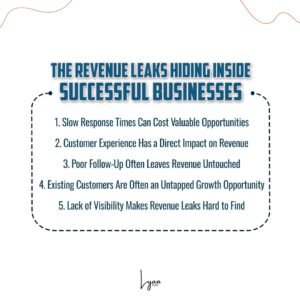
3. Poor Follow-Up Often Leaves Revenue Untouched
Not every prospect is ready to make a decision immediately. Some need additional information, internal approvals, or simply more time to evaluate their options. This is where follow-up becomes important.
Many businesses assume that a lack of response means a lack of interest. In reality, prospects often become busy, distracted, or delayed by factors unrelated to the buying decision itself. Without a structured follow-up process, these opportunities can quietly disappear.
Consistent follow-up helps maintain visibility, builds trust, and keeps conversations moving forward. It ensures that potential customers don’t forget about your business while making their decision.
Key Insight
Some of the easiest revenue opportunities already exist inside conversations that were never properly followed up.
4. Existing Customers Are Often an Untapped Growth Opportunity
Businesses naturally focus on acquiring new customers because growth is often associated with bringing in new revenue. However, existing customers frequently represent one of the most valuable opportunities available.
Customers who have already experienced your product or service require less effort to engage because trust has already been established. Additional services, upgrades, renewals, and referrals can often generate significant revenue without the cost of acquiring a completely new customer.
Yet many businesses spend the majority of their resources chasing new opportunities while overlooking the relationships they have already built.
Key Insight
The next sale doesn’t always come from a new customer. It often comes from an existing one.
5. Lack of Visibility Makes Revenue Leaks Hard to Find
Businesses can’t improve what they don’t understand. While most organisations track sales and revenue, fewer track where opportunities are being lost throughout the customer journey.
Understanding metrics such as enquiry conversion rates, follow-up effectiveness, customer retention, and website behaviour can reveal valuable insights. These numbers often highlight problems that are difficult to identify through intuition alone.
Without visibility, businesses are forced to make decisions based on assumptions. With visibility, they can focus their efforts on areas that create the greatest impact.
Key Insight
The first step to fixing a revenue leak is knowing where it exists.

How Lyan.Digital Can Help
At Lyan.Digital, we help businesses identify the gaps that affect growth and conversion performance. Rather than focusing solely on generating more traffic, we look at how customers move through your business and where opportunities may be getting lost.
Here’s how we help:
- Website and conversion audits
- Customer journey optimisation
- SEO-driven content strategies
- Lead nurturing systems
- Analytics and performance tracking
By improving clarity, customer experience, and conversion pathways, we help businesses unlock more value from the opportunities they already generate.
Frequently Asked Questions
What is a revenue leak in business? A revenue leak refers to any process, inefficiency, or gap that causes a business to lose potential income that could otherwise have been captured.
How can I identify revenue leaks? Reviewing customer journeys, conversion data, response times, and retention metrics often reveals areas where opportunities are being lost.
Are revenue leaks common in growing businesses? Yes. As businesses scale, processes become more complex, making it easier for inefficiencies to develop unnoticed. Should businesses focus on fixing leaks before generating more leads? In many cases, yes. Improving conversions and retention often delivers faster returns than simply increasing lead volume.
Here’s how it helps
A Consulting Firm With Strong Traffic but Low Conversions
The business was attracting consistent website traffic, but enquiries remained lower than expected. After reviewing the customer journey, they simplified their messaging and improved enquiry pathways, resulting in a noticeable increase in lead generation.
A SaaS Company Losing Potential Customers During Onboarding
New users were signing up but failing to complete onboarding. By reducing complexity and improving communication during the onboarding process, the company significantly improved customer activation rates.
A Professional Services Business Overlooking Existing Clients
The company focused heavily on new customer acquisition. By implementing a structured client engagement strategy, they generated additional revenue through referrals and repeat business.
Revenue growth isn’t always about attracting more customers. Sometimes the biggest opportunities already exist within the business itself.
Slow response times, poor follow-up, customer experience issues, and overlooked customer relationships can all quietly impact performance. Individually, these issues may seem minor. Together, they can create significant barriers to growth.
Businesses that regularly review their customer journey and identify areas of friction are often able to improve results without dramatically increasing their marketing efforts. Before investing in more traffic or lead generation, it’s worth taking a closer look at where opportunities may already be slipping away.
In many cases, fixing a revenue leak can be far more valuable than finding a new lead.