
Not all salespeople are created equal. Some hit targets occasionally. Others consistently outperform, adapt under pressure, and push the company forward. The difference isn’t luck it’s mindset, systems, and discipline. This blog explains the difference between a sales rep and a sales athlete, and how founders can build teams of athletes who thrive in competitive B2B markets.
-
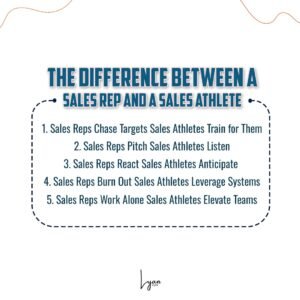
Sales Reps Chase Targets Sales Athletes Train for Them
Most sales reps focus only on hitting this quarter’s number. Sales athletes treat sales like a sport: they train, prepare, and improve daily so targets feel like milestones, not miracles.
Key Insight: Athletes don’t wing it they train for consistency.
-
Sales Reps Pitch Sales Athletes Listen
Average reps rush to pitch features. Sales athletes listen, diagnose, and position solutions around the buyer’s pain. They know the game isn’t about talking more it’s about understanding better.
Key Insight: Listening is the sales athlete’s superpower.
-
Sales Reps React Sales Athletes Anticipate
Reps wait for objections and scramble to respond. Athletes anticipate objections, prepare frameworks, and handle them calmly. Preparation makes them appear confident and trustworthy.
Key Insight: Anticipation beats reaction in every sales conversation.
-
Sales Reps Burn Out Sales Athletes Leverage Systems
Reps rely on hustle alone. Athletes lean on playbooks, cadences, and automation so their energy is spent on high-value conversations. That’s how they scale without burning out.
Key Insight: Systems give athletes stamina.
-
Sales Reps Work Alone Sales Athletes Elevate Teams
Reps often see sales as an individual sport. Athletes know it’s a team game. They share learnings, refine playbooks, and raise the performance of everyone around them.
Key Insight: Athletes make teams better, not just numbers higher.
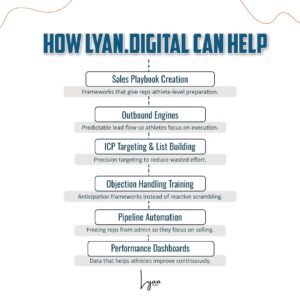
How Lyan.Digital Can Help
At Lyan.Digital, we help B2B companies turn sales teams into sales athletes by building the right systems, training, and culture:
- Sales Playbook Creation -Frameworks that give reps athlete-level preparation.
- Outbound Engines -Predictable lead flow so athletes focus on execution.
- ICP Targeting & List Building -Precision targeting to reduce wasted effort.
- Objection Handling Training -Anticipation frameworks instead of reactive scrambling.
- Pipeline Automation -Freeing reps from admin so they focus on selling.
- Performance Dashboards -Data that helps athletes improve continuously.
With us, teams stop relying on raw hustle and start performing like trained athletes.
Frequently Asked Questions
- What makes a sales athlete different from a top rep? Sales athletes are consistent, process-driven, and improve continuously not just occasionally hitting big wins.
- Can any rep become a sales athlete? Yes, with the right systems, training, and mindset shifts.
- Do sales athletes still need playbooks? Absolutely. Even the best athletes rely on structured frameworks to win.
- Is this about hiring better talent? Not only. It’s about enabling existing reps to perform at a higher level.
- How do I know if my team lacks athletes? If success depends on one or two “lucky” closers, you need to build systems for athletic consistency.
- What’s the first step to build sales athletes? Document what works (playbooks), then train your team to practice and refine it.
Here’s How This Helps
SaaS Firm’s Rep-to-Athlete Shift
A SaaS company had reps closing deals sporadically. After implementing structured playbooks and training, performance became consistent across the team.
Consulting Agency’s Listening Gap
A consulting agency’s reps pushed features too hard. Training them to listen and diagnose pain boosted close rates by 25%.
IT Supplier’s Burnout Problem
An IT supplier’s sales team worked long hours but plateaued. Automation and cadences reduced stress, and performance actually improved.
Regional Provider’s Team Lift
A regional provider empowered their top rep to mentor others. Knowledge-sharing transformed the whole team into high-performing athletes.
The difference between sales reps and sales athletes is the difference between chaos and consistency. Reps rely on luck; athletes rely on preparation, systems, and mindset. At Lyan.digital, we help B2B founders build sales teams that think, act, and perform like athletes creating pipelines that win predictably.