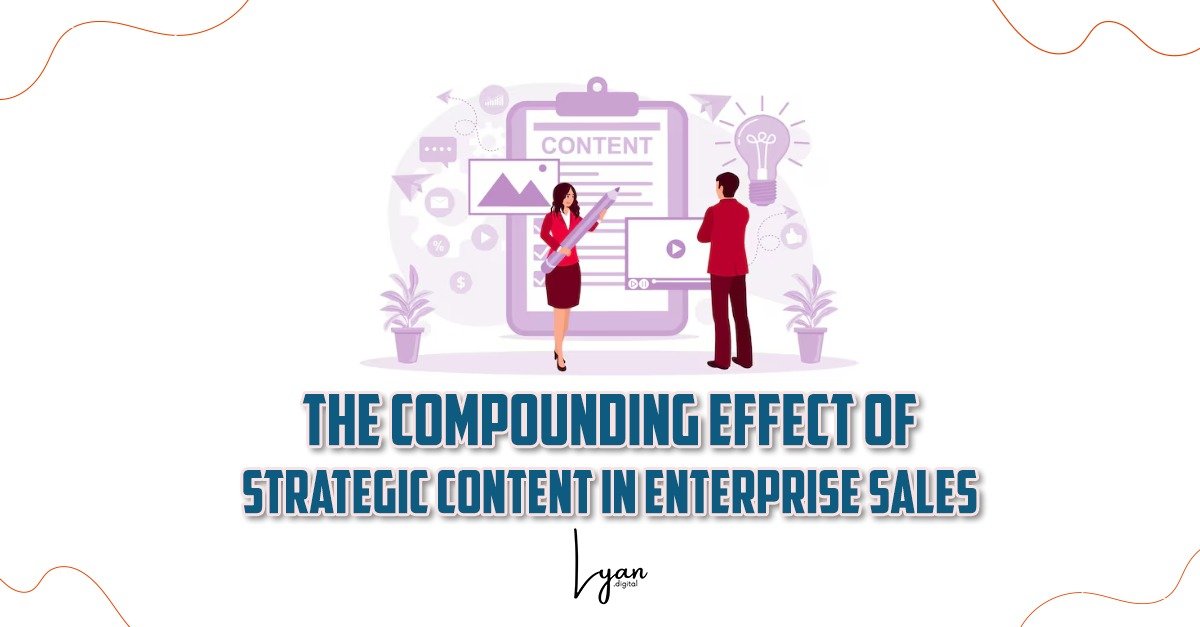
Most companies treat content as a campaign. A blog post here. A webinar there. A few LinkedIn posts each week. But enterprise growth doesn’t come from scattered content it comes from compounded perception.
Strategic content builds familiarity before the first sales call. It builds authority before the demo. It builds trust before procurement even starts asking questions. When done consistently and intentionally, content becomes an invisible accelerator inside the sales process.
It doesn’t just attract leads. It shortens cycles. It reduces objections. It strengthens internal advocacy.
That’s the compounding effect most companies’ underestimate.
-
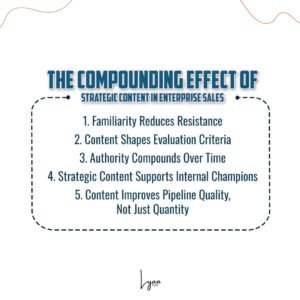
Familiarity Reduces Resistance
When buyers encounter your brand repeatedly through insights, frameworks, and thought leadership you stop feeling like a cold vendor.
You start feeling like a known entity.
Familiarity lowers skepticism. And lower skepticism reduces friction.
Key Insights:
- Repeated exposure builds comfort.
- Familiar brands face fewer objections.
- Visibility increases shortlist probability.
-
Content Shapes Evaluation Criteria
When your content consistently frames problems in a specific way, buyers begin to evaluate vendors through that same lens.
This means you influence:
- What questions they ask
- What metrics they prioritize
- What risks they consider
Content doesn’t just inform. It shapes perception.
Key Insights:
- Narrative consistency controls comparison.
- Education influences criteria.
- Strategic framing improves win rates.
-
Authority Compounds Over Time
One strong article builds credibility.
Twenty aligned insights build authority.
When enterprise buyers see depth and clarity in your thinking, your expertise becomes assumed rather than questioned.
Authority reduces sales friction before conversations begin.
Key Insights:
- Consistency builds authority.
- Expertise lowers evaluation barriers.
- Authority increases margin tolerance.
-
Strategic Content Supports Internal Champions
Your internal advocate often shares:
- Blog posts
- Case studies
- Insight reports
These assets help them justify your solution to finance, operations, and leadership.
Without content, they must explain everything themselves.
With content, your narrative spreads inside the organization.
Key Insights:
- Content strengthens internal advocacy.
- Decision enablement extends beyond sales calls.
- Structured insights improve consensus.
-
Content Improves Pipeline Quality, Not Just Quantity
Strategic content filters interest.
Buyers who resonate with your perspective arrive better informed and more aligned.
This improves:
- Lead quality
- Sales conversations
- Close probability
Content becomes a qualification mechanism.
Key Insights:
- Aligned content attracts aligned buyers.
- Education increases readiness.
- Quality beats volume.
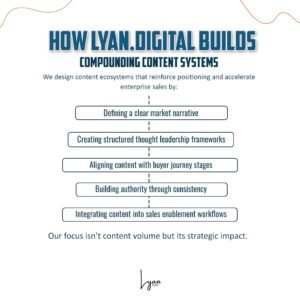
How Lyan.digital Builds Compounding Content Systems
We design content ecosystems that reinforce positioning and accelerate enterprise sales by:
- Defining a clear market narrative
- Creating structured thought leadership frameworks
- Aligning content with buyer journey stages
- Building authority through consistency
- Integrating content into sales enablement workflows
Our focus isn’t content volume its strategic impact.
Frequently Asked Questions
Can content really shorten sales cycles? Yes. Familiarity and authority reduce evaluation friction.
Does enterprise content need to be long-form? Depth matters more than length.
How often should strategic content be published? Consistency is more important than frequency spikes.
Can content replace outbound efforts? It complements and strengthens them.
How long does it take to see compounding impact? Usually within a few months of consistent execution.
Does content improve pricing leverage? Yes. Authority increases perceived value.
Is content only for awareness stage? No. It influences every stage of the funnel.
Here’s how it helps
- A SaaS company aligned all blog content around a single revenue framework. Over time, enterprise buyers referenced it during sales calls.
- A cybersecurity vendor produced structured industry reports. Internal champions used them to justify vendor selection.
- A B2B automation firm-built comparison guides that subtly shaped evaluation criteria. Competitive pressure decreased.
- An analytics platform invested in consistent thought leadership. Demo-to-close velocity improved due to pre-built authority.
If your sales process feels heavier than it should, your content strategy may be reactive instead of strategic. When insights align with positioning and repeat consistently across channels, trust compounds quietly. Instead of publishing randomly, build a narrative ecosystem that reinforces authority and strengthens every stage of the funnel. Compounding content doesn’t just generate attention it generates momentum.