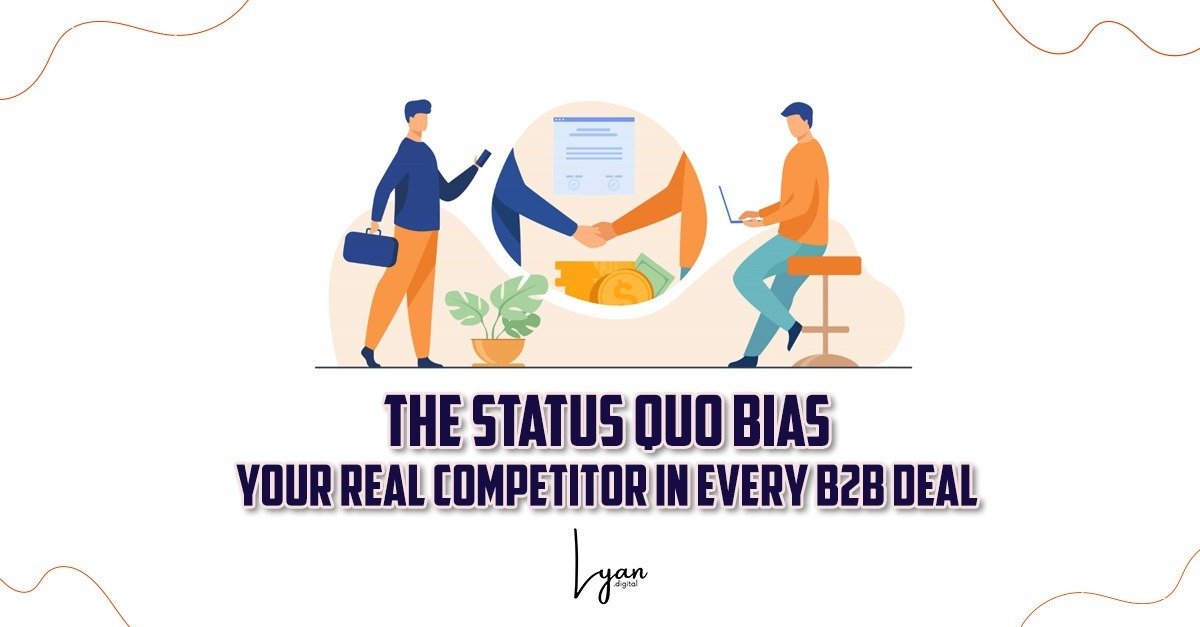
Most B2B companies believe they are competing against other vendors. In reality, their strongest competitor is inaction. It’s the comfort of existing systems. The familiarity of current workflows. The quiet belief that “what we have is good enough.”
This is called status quo bias the natural human tendency to prefer existing conditions over change. In enterprise environments, where decisions affect budgets, teams, and reputations, maintaining the current state often feels safer than adopting something new.
If you don’t address status quo bias directly, even a superior solution can lose to “let’s revisit this next quarter.”
-
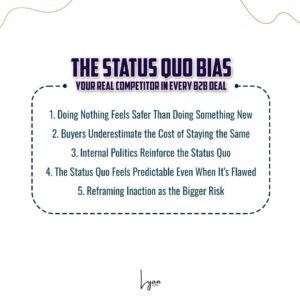
Doing Nothing Feels Safer Than Doing Something New
Change introduces uncertainty. Even if your solution promises improvement, buyers must justify the disruption. They must defend the transition. They must manage adoption.
Maintaining the current system requires no explanation. No political effort. No risk exposure.
If your messaging only emphasizes improvement and ignores disruption concerns, the comfort of the status quo wins.
Key Insights:
- Inaction often feels safer than innovation.
- Comfort reduces urgency.
- Disruption fear slows decision-making.
-
Buyers Underestimate the Cost of Staying the Same
Status quo bias thrives when the cost of inaction is invisible.
Most organizations don’t quantify:
- Operational inefficiencies
- Lost revenue opportunities
- Compounding workflow delays
- Hidden churn drivers
If the pain of staying the same isn’t clearly framed, urgency doesn’t develop.
You must make the invisible visible.
Key Insights:
- Unquantified pain weakens momentum.
- Highlighting hidden costs increases urgency.
- Clarity drives reconsideration.
-
Internal Politics Reinforce the Status Quo
In enterprise environments, change requires multiple approvals. And every stakeholder has something to lose if the transition fails.
It’s easier to defend:
“We stayed with our existing vendor.”
Than:
“We switched and something went wrong.”
If your messaging doesn’t reduce perceived blame risk, resistance increases.
Key Insights:
- Political safety reinforces inertia.
- Change requires emotional reassurance.
- Risk framing influences action.
-
The Status Quo Feels Predictable Even When It’s Flawed
Predictability creates psychological comfort.
Even inefficient systems feel manageable because teams understand them.
Your job isn’t just to promise improvement. It’s to demonstrate that transition is structured, supported, and low-risk.
When change feels predictable, bias weakens.
Key Insights:
- Familiarity creates confidence.
- Structure reduces uncertainty.
- Clear transition plans reduce hesitation.
-
Reframing Inaction as the Bigger Risk
The most effective way to counter status quo bias is to shift the narrative.
Instead of positioning your solution as “a better option,” position the current state as “a growing liability.”
When buyers see the risk of inaction clearly, maintaining the status quo becomes the uncomfortable choice.
Key Insights:
- Urgency comes from reframing consequences.
- Inaction must feel costly.
- Strategic framing shifts decision momentum.
How Lyan.digital Helps You Overcome Status Quo Bias
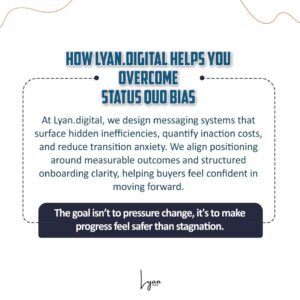
At Lyan.digital, we design messaging systems that surface hidden inefficiencies, quantify inaction costs, and reduce transition anxiety. We align positioning around measurable outcomes and structured onboarding clarity, helping buyers feel confident in moving forward.
The goal isn’t to pressure change it’s to make progress feel safer than stagnation.
Frequently Asked Questions
Is status quo bias common in enterprise sales? Yes. It is one of the strongest psychological forces in B2B buying.
How do we identify inaction risk? Through customer interviews, churn analysis, and operational audits.
Does emphasizing risk create fear-based marketing? Not if done responsibly. It’s about clarity, not alarm.
Can small improvements overcome bias? Only if they are framed strategically and tied to measurable impact.
Does authority reduce status quo resistance? Yes. Recognized expertise lowers perceived risk of change.
How long does it take to shift buyer perception? It begins when the cost of inaction becomes visible.
What’s the biggest mistake vendors make? Ignoring inertia as a competitor.
Here’s How This Helps
- A SaaS company reframed its messaging to highlight lost productivity from outdated systems. Buyers began prioritizing change rather than postponing it.
- A cybersecurity vendor quantified compliance penalties associated with current setups. Enterprise urgency increased significantly.
- A B2B automation firm introduced side-by-side comparisons showing hidden manual inefficiencies. Prospects began questioning their existing processes.
- An analytics platform demonstrated how delayed insights impacted revenue forecasts. Executive engagement strengthened immediately.
Final Thoughts
Your toughest competitor isn’t another vendor.
It’s comfort.
It’s familiarity.
It’s inertia.
If you want to win enterprise deals, you must make staying the same feel riskier than moving forward.
When progress feels safer than stagnation, decisions happen.