This one is frustrating.
Because you know you’re better.
You take time to explain everything properly. You walk them through the logic, the process, the “why” behind every step. You leave no gap.
The other guy?
Half the explanation.
Way simpler pitch.
Barely scratches the surface.
And somehow… they close.
You sit there thinking, what just happened?
Here’s what happened.
They didn’t win because they knew more.
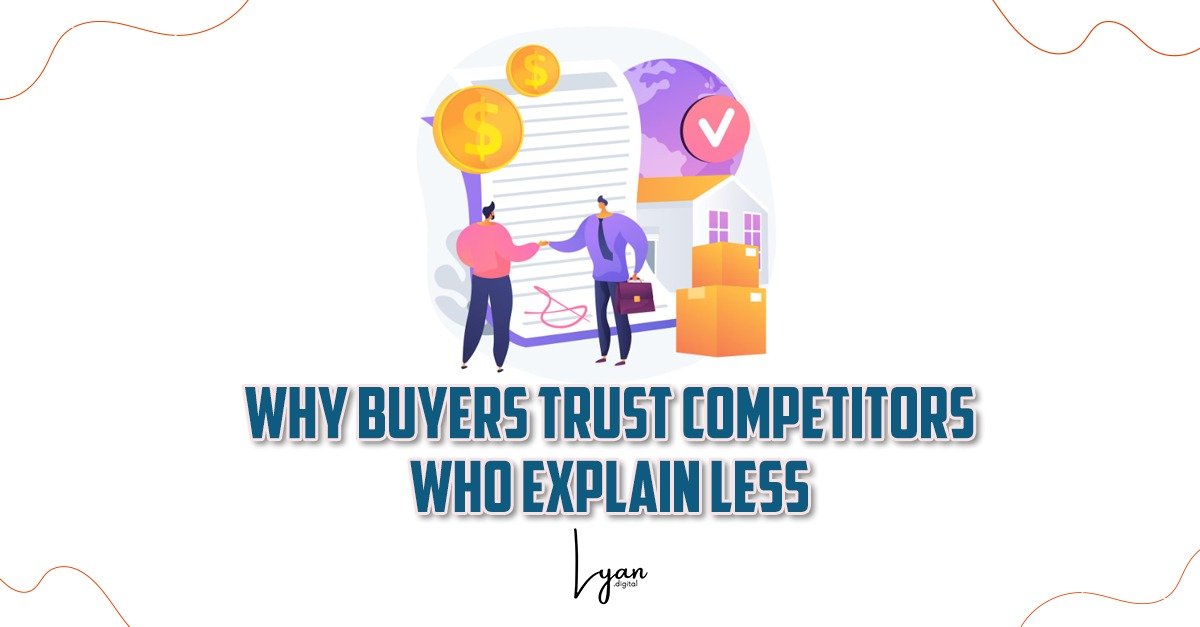
They won because they were easier to understand.
And when someone is easier to understand…
they automatically feel easier to trust.
-
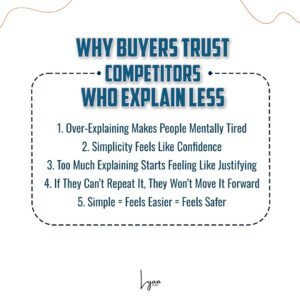
Over-Explaining Makes People Mentally Tired
From your side, it feels like you’re being thorough.
From their side?
It starts to feel like work.
Too many points. Too many layers. Too many things to keep track of.
At some point, they stop trying to fully understand it.
They just sit there, nodding… waiting for it to end.
And when something feels like effort, people don’t lean in.
They pull back.
Key Insight:
If your explanation feels like work, the buyer checks out before they decide.
-
Simplicity Feels Like Confidence
Think about it.
When someone explains something in a clean, straightway no extra fluff it just feels like they know what they’re doing.
They’re not trying to impress.
They’re not trying to prove anything.
They just say what matters and stop.
That lands differently.
It feels calm. Certain. Grounded.
And people trust that energy way more than a long explanation.
Key Insight:
The clearer you are, the more confident you seem even without saying more.
-
Too Much Explaining Starts Feeling Like Justifying
This is subtle, but it shows.
When you keep adding more and more detail, it can start to feel like you’re trying to convince them.
Like you’re filling gaps before they even question you.
And that changes how it comes across.
Instead of sounding confident, it starts sounding like:
“I need you to believe this.”
And people can sense that.
Even if everything you’re saying is right.
Key Insight:
The moment it feels like you’re trying too hard to prove something, trust quietly drops.
-
If They Can’t Repeat It, They Won’t Move It Forward
After the call ends, you’re not in control anymore.
They are.
Now they have to take what you said and explain it to someone else.
And here’s the problem.
If your explanation was long, layered, and complex…
they don’t remember it clearly.
So when they try to explain it, it comes out messy.
And when it sounds messy, it doesn’t move forward.
That’s where simpler competitors win their message sticks.
Key Insight:
If your buyer can’t explain it in 2–3 lines, the deal slows down right there.
-
Simple = Feels Easier = Feels Safer
This is the part no one talks about.
Even if your solution is better…
If it sounds complicated, people assume it will be harder to implement.
More effort. More coordination. More risk.
The simpler option?
Feels lighter. Feels manageable.
So they lean toward that not because it’s better,
but because it feels easier to deal with.
Key Insight:
What feels simple feels doable and what feels doable gets chosen.
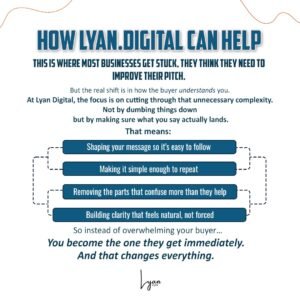
How Lyan.digital Can Help
This is where most businesses get stuck, they think they need to improve their pitch.
But the real shift is in how the buyer understands you.
At Lyan Digital, the focus is on cutting through that unnecessary complexity.
Not by dumbing things down
but by making sure what you say actually lands.
That means:
- shaping your message so it’s easy to follow
- making it simple enough to repeat
- removing the parts that confuse more than they help
- and building clarity that feels natural, not forced
So instead of overwhelming your buyer…
You become the one they get immediately.
And that changes everything.
Here’s how it helps
A service founder kept losing deals to competitors with simpler pitches. Nothing was wrong with the offer it just sounded heavier. Once the messaging was simplified, deals started moving faster.
A SaaS founder explained every feature in detail. Buyers understood it… but couldn’t retain it. Simplifying the explanation improved conversions without touching the product.
A consulting firm realized clients couldn’t explain their value internally. After tightening the message, the same leads started converting better.
Frequently Asked Questions
Should I stop explaining in detail? No. Just don’t lead with it. Start simple add depth only when needed.
Will simplifying make me look less knowledgeable? No. It usually does the opposite. Clarity feels like mastery.
Why do buyers prefer simpler explanations? Because they’re easier to understand, remember, and act on.
How simple is too simple? If it still captures the core idea clearly, it’s enough.
What’s the biggest mistake here? Thinking more explanation = more trust.
You don’t lose deals because you said less.
You lose them because what you said felt heavier than it needed to be.
Buyers don’t sit there rewarding complexity.
They move toward what feels clear, easy, and manageable.
And when your message is simple enough to understand, remember, and repeat
You don’t have to fight for trust.
It’s already there.