One of the most frustrating moments in B2B sales is hearing “This looks great” and then watching the deal stall for weeks or months. The product fits. The demo went well. Budget seems available. The buyer even verbally agrees. Yet nothing moves.
Enterprise decisions rarely collapse because of dissatisfaction. They stall because of uncertainty, internal politics, risk perception, and competing priorities. A “yes” in B2B often means “I’m interested” not “I’m ready.” Understanding why buyers delay decisions is critical if you want to prevent momentum from quietly fading.
-
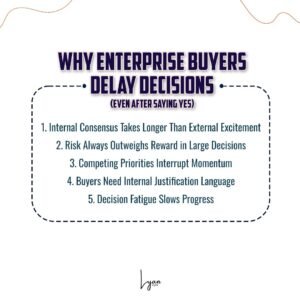
Internal Consensus Takes Longer Than External Excitement
Even if one stakeholder is convinced, enterprise purchases require alignment across teams. Finance, operations, IT, legal each group evaluates from a different angle.
Enthusiasm from one department doesn’t equal approval from all.
The delay often reflects internal alignment work happening behind the scenes.
Key Insights:
- Enterprise deals are multi-stakeholder decisions.
- One advocate is not full approval.
- Alignment friction slows momentum.
-
Risk Always Outweighs Reward in Large Decisions
The larger the deal, the higher the perceived risk.
Buyers fear:
- Implementation failure
- Internal criticism
- Budget waste
- Reputation damage
Even when your solution excites them, hesitation appears if risk isn’t clearly reduced.
Key Insights:
- Perceived risk delays action.
- Reassurance accelerates commitment.
- Confidence matters more than excitement.
-
Competing Priorities Interrupt Momentum
Enterprise environments are dynamic. Even a high-interest project can get deprioritized when leadership shifts focus.
Your deal may not be rejected it may simply be overshadowed.
Without structured follow-up and reinforcement, urgency fades.
Key Insights:
- Momentum requires reinforcement.
- Competing initiatives dilute urgency.
- Silence doesn’t always mean disinterest.
-
Buyers Need Internal Justification Language
Your contact may believe in your solution but struggle to articulate the value internally.
If you haven’t equipped them with:
- ROI clarity
- Risk mitigation narratives
- Strategic positioning language
they hesitate before presenting it upward.
Key Insights:
- Internal advocacy requires tools.
- Clear narratives ease approval.
- Justification accelerates progression.
-
Decision Fatigue Slows Progress
Enterprise leaders evaluate dozens of initiatives simultaneously. Even strong proposals can stall because cognitive bandwidth is limited.
When decisions feel complex, buyers postpone them.
Simplifying the decision framework reduces delay.
Key Insights:
- Simplicity reduces decision fatigue.
- Clear next steps sustain momentum.
- Structure supports progress.
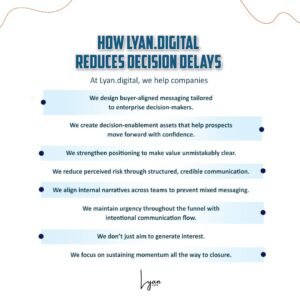
How Lyan.digital Reduces Decision Delays
At Lyan.digital, we design buyer-aligned messaging and decision-enablement assets that help enterprise prospects move forward confidently. We strengthen positioning, reduce perceived risk, align internal narratives, and structure communication to maintain urgency throughout the funnel.
The goal isn’t just to generate interest it’s to maintain momentum until closure.
Frequently Asked Questions
Is delay a sign the deal is lost? Not always. It often reflects internal processes rather than rejection.
How can we reduce risk perception? By providing proof, clarity, and structured implementation plans.
Should we increase follow-ups? Strategic follow-ups help; excessive pressure harms trust.
Does pricing cause most delays? Often, perceived risk matters more than cost.
Can content help accelerate enterprise deals? Yes. Strategic content reinforces value and reduces uncertainty.
How long should enterprise deals take? It varies, but structured momentum reduces unnecessary delay.
What’s the biggest mistake vendors make? Assuming verbal enthusiasm equals internal approval.
Here’s How This Helps
- A SaaS company experienced repeated delays after positive demos. By adding ROI summaries and internal justification decks, decision timelines shortened significantly.
- A cybersecurity vendor noticed deals stalling during legal review. Providing pre-structured compliance documentation reduced friction and accelerated approvals.
- A B2B analytics platform created executive-level summary briefs for stakeholders. Internal consensus formed faster because the value was easier to communicate.
- An automation firm replaced generic follow-ups with strategic recap insights, maintaining urgency and increasing close rates.