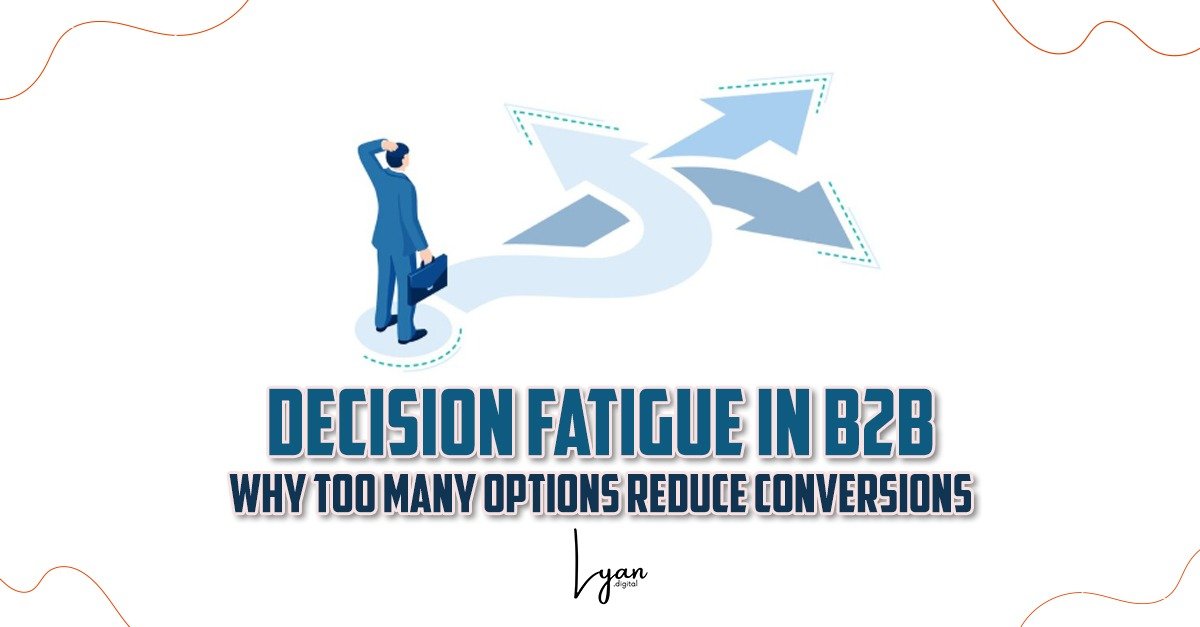
You think you’re making it easier for them.
More options. More flexibility. More ways to say yes.
Different packages. Custom approaches. Multiple directions.
From your side, it feels thoughtful.
From their side?
It starts to feel like work.
Because now they’re not just deciding whether to move forward…
They’re deciding how to move forward.
And that’s where things slow down.
Not because they don’t want it.
But because there’s too much to think about.
-
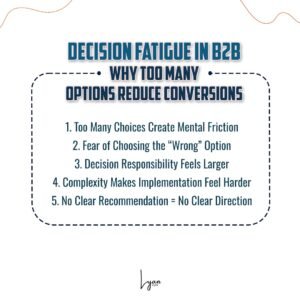
Too Many Choices Create Mental Friction
At first, options feel helpful.
But after a point, they start doing the opposite.
Now the buyer is thinking:
- Which one is right for us?
- What happens if we choose wrong?
- Should we compare everything properly first?
Instead of moving forward, they get stuck trying to figure things out.
And the more they think, the less they move.
Key Insight:
More choices don’t make decisions easier they make them heavier.
-
Fear of Choosing the “Wrong” Option
When there’s only one clear path, it’s simple.
When there are multiple options, there’s risk.
Because now they’re not just choosing you…
They’re choosing between your versions.
And that creates pressure.
“What if this isn’t the best one?”
“What if we regret this later?”
So instead of committing…
They wait.
Key Insight:
The more options you give, the more room you create for doubt.
-
Decision Responsibility Feels Larger
When a buyer picks one option out of many, it feels like a bigger decision.
Because now, it’s not just:
“We chose this company.”
It’s:
“We chose this specific path and we’re responsible for it.”
That added weight makes people more cautious.
More careful.
More delayed.
Key Insight:
When responsibility feels heavier, decisions take longer.
-
Complexity Makes Implementation Feel Harder
More options usually mean more explanation.
More paths. More variations. More “it depends.”
And that starts to feel like:
“This might get complicated.”
Even if your solution is actually simple…
If it sounds complex, the buyer assumes:
- more effort
- more coordination
- more things that could go wrong
So they hesitate.
Key Insight:
If it sounds complex, it feels risky even if it isn’t.
-
No Clear Recommendation = No Clear Direction
This is the biggest one.
You present options. You explain them well.
But you don’t say:
“This is what you should do.”
So now the buyer is left deciding alone.
And most people don’t want that responsibility.
They want guidance. Direction. Clarity.
Without that, they pause.
Because they’re unsure which way to go.
Key Insight:
When you don’t guide the decision, the buyer delays it.
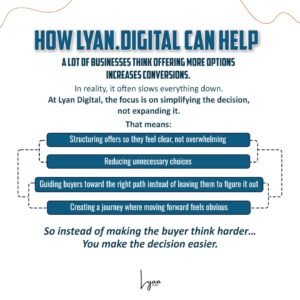
How Lyan.digital Can Help
A lot of businesses think offering more options increases conversions.
In reality, it often slows everything down.
At Lyan Digital, the focus is on simplifying the decision, not expanding it.
That means:
- structuring offers so they feel clear, not overwhelming
- reducing unnecessary choices
- guiding buyers toward the right path instead of leaving them to figure it out
- and creating a journey where moving forward feels obvious
So instead of making the buyer think harder…
You make the decision easier.
Here’s How It Helps
A service business offered multiple packages to “fit different needs.” Buyers got stuck comparing options instead of deciding. Reducing choices improved conversions.
A SaaS company had different plans with too many variations. Prospects delayed because they weren’t sure which one to choose.
A consultant stopped giving multiple directions and started recommending one clear path. Deals started closing faster.
Frequently Asked Questions
Isn’t giving options better for the buyer? Only to a point. Too many options create confusion, not clarity.
How many options should I offer? Keep it minimal enough to give flexibility, not overwhelm.
Should I recommend one option? Yes. Buyers move faster when there’s clear direction.
Why do buyers delay when there are many choices? Because choosing feels riskier and more complex.
What’s the biggest mistake here? Thinking flexibility always helps when it often slows decisions.
More options feel like better service.
But in reality…
They make decisions harder.
Because now the buyer isn’t just deciding yes or no.
They’re deciding which one, why, and what if it’s wrong.
And that’s where things get stuck.
But when the path is clear, simple, and guided
The decision doesn’t feel heavy.
It feels easy.
And that’s when deals actually move.