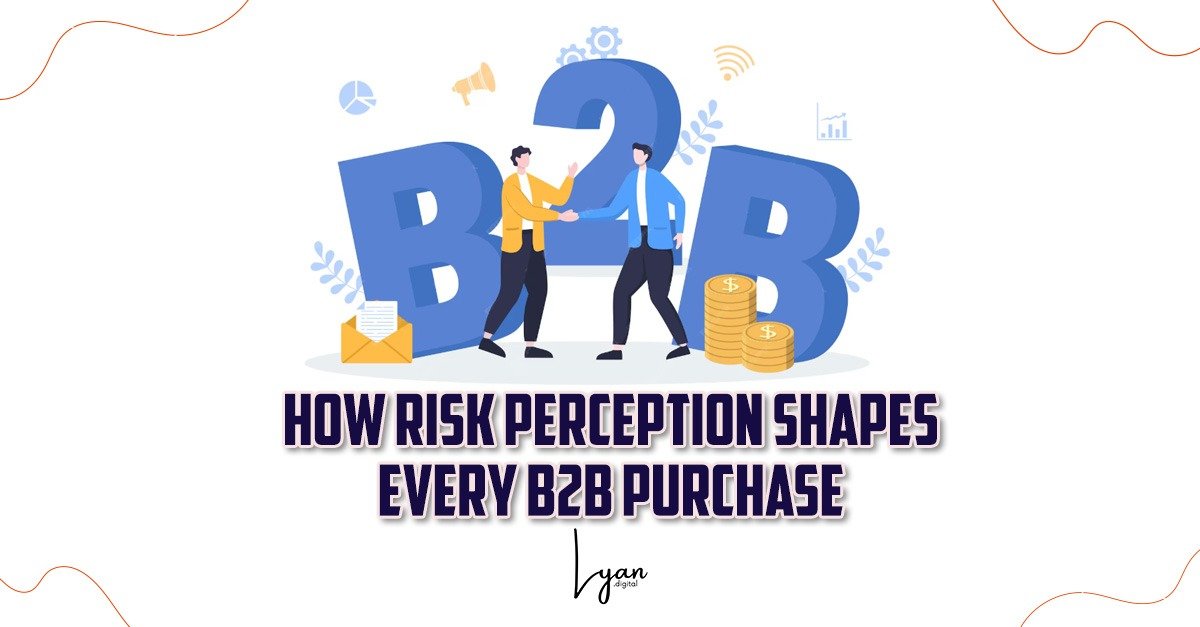
B2B buyers rarely lose deals because a product isn’t impressive enough. They lose deals because it feels risky.
In enterprise environments, every decision carries consequences. Budget exposure. Operational disruption. Internal accountability. Career reputation. Even if your solution promises strong upside, the moment it feels uncertain, hesitation begins.
Understanding risk perception is more important than understanding features. Because buyers don’t just evaluate what they gain they evaluate what they could lose.
If you can reduce perceived risk, you increase conversion probability dramatically.
-
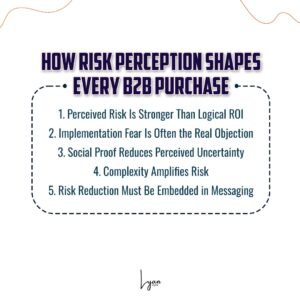
Perceived Risk Is Stronger Than Logical ROI
You might present clear ROI numbers, case studies, and projections. But if buyers feel even slight uncertainty around execution, they delay.
Why?
Because loss aversion is powerful. The pain of a failed decision feels heavier than the reward of a successful one.
Your messaging must reduce downside before amplifying upside.
Key Insights:
- Loss avoidance drives decision behaviour.
- Emotional safety influences commitment.
- Risk reduction increases velocity.
-
Implementation Fear Is Often the Real Objection
Buyers may say, “We need to think about budget,” but often they are thinking:
- Will this disrupt operations?
- Will adoption fail?
- Will integration break something?
- Will I be blamed?
If your messaging doesn’t proactively address implementation concerns, silence increases.
Clear onboarding paths and structured transition plans reduce friction.
Key Insights:
- Implementation anxiety delays approval.
- Clarity reduces operational fear.
- Structure increases confidence.
-
Social Proof Reduces Perceived Uncertainty
Enterprise buyers feel safer choosing vendors who resemble previous successful decisions.
Industry-specific case studies, recognizable logos, testimonials from similar roles all reduce psychological risk.
Buyers want reassurance that others like them made the same choice safely.
Key Insights:
- Familiarity increases comfort.
- Similar use cases strengthen trust.
- Proof reduces hesitation.
-
Complexity Amplifies Risk
When your solution feels complicated, buyers assume higher failure probability.
Even if your product is powerful, unclear explanations create mental friction.
Simplicity lowers perceived risk.
The easier it feels to understand, the safer it feels to adopt.
Key Insights:
- Simplicity builds confidence.
- Complexity increases hesitation.
- Clear narratives accelerate decisions.
-
Risk Reduction Must Be Embedded in Messaging
Most companies highlight benefits loudly and risk mitigation quietly.
But risk reassurance should be central.
This includes:
- Clear implementation roadmaps
- Defined support systems
- Transparent pricing
- Measurable milestones
When buyers feel protected, momentum increases.
Key Insights:
- Risk mitigation should be visible, not implied.
- Transparency strengthens credibility.
- Safety accelerates commitment.
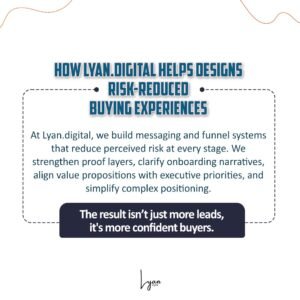
How Lyan.digital Designs Risk-Reduced Buying Experiences
At Lyan.digital, we build messaging and funnel systems that reduce perceived risk at every stage. We strengthen proof layers, clarify onboarding narratives, align value propositions with executive priorities, and simplify complex positioning.
The result isn’t just more leads its more confident buyers.
Frequently Asked Questions
Is risk perception more important than price? Often, yes. Buyers pay more for perceived safety.
How do we identify hidden buyer fears? Through sales conversation analysis and objection mapping.
Can risk messaging make us sound defensive? Not if positioned as reassurance rather than justification.
Should we overemphasize guarantees? Only when credible. Transparency matters more than promises.
Does authority reduce risk perception? Yes. Recognized expertise builds confidence.
How quickly can risk perception shift? Immediate clarity can reduce hesitation early in the funnel.
What’s the biggest mistake companies make? Assuming strong features automatically reduce fear.
Here’s How This Helps
- A SaaS company reduced churn by adding clearer onboarding timelines in its messaging. Buyers felt more confident during evaluation.
- A cybersecurity vendor added compliance certifications prominently to its homepage. Enterprise hesitation decreased significantly.
- A B2B automation firm simplified technical language into outcome-focused explanations. Conversion rates improved due to reduced complexity.
- An analytics provider introduced milestone-based implementation phases. Enterprise buyers approved projects faster.
Final Thoughts
B2B decisions aren’t just about potential gain. They’re about perceived safety. If your messaging reduces uncertainty, you reduce friction. And when friction drops,
momentum rises. Risk perception doesn’t just influence deals it defines them.